
Versão em texto
Cuidado informado pelos hormônios para mulheres com psicose
Um possível efeito protetor do estrogênio contra a psicose tem sido descrito há muito tempo em estudos científicos e epidemiológicos. É provável que você já conheça esse fenômeno pelo segundo pico de incidência de esquizofrenia específico do sexo feminino, que ocorre mais tarde na vida, em torno da perimenopausa, à medida que os níveis de estrogênio declinam.
Como esse conhecimento deve influenciar a sua tomada de decisão clínica? Como o estrogênio interage com o tratamento padrão da psicose? E quando ele deveria ser o próprio tratamento? Uma revisão recente publicada na Lancet Psychiatry lançou luz sobre o papel dos hormônios ovarianos na psicose e oferece recomendações de como incorporar essas informações à prática clínica e oferecer um cuidado informado pelos hormônios.
Baixe o PDF e outros arquivos
A exacerbação psicótica perimenstrual difere do TDPM
Os autores deste estudo realizaram uma revisão narrativa com o objetivo de descrever a relação entre o ciclo menstrual e os sintomas psicóticos, as formas pelas quais os hormônios ovarianos podem tanto influenciar quanto ser influenciados pelos tratamentos antipsicóticos, e o papel dos tratamentos à base de estrogênio no manejo da psicose. Alguns de seus pontos me chamaram bastante a atenção.
Os autores descreveram que os sintomas psicóticos tendem a piorar e o risco de hospitalização aumenta durante a fase perimenstrual. Essa fase abrange um período de quatro a seis dias entre a fase lútea tardia e a fase folicular inicial, quando tanto o estrogênio quanto a progesterona estão em seus níveis mais baixos. Em termos acessíveis, eu descreveria isso às pacientes como os poucos dias antes e depois do início da menstruação.
Notavelmente, esse padrão de exacerbação é diferente do classicamente observado e ensinado para o transtorno disfórico pré-menstrual (TDPM). No TDPM, os sintomas de humor pioram na fase lútea, e o início da fase folicular com a menstruação traz alívio, frequentemente de forma quase imediata.
Rastreie os sintomas prospectivamente ao longo dos ciclos
Para pacientes com suspeita de flutuação dos sintomas associada ao ciclo menstrual, os autores recomendam o rastreamento prospectivo dos sintomas ao longo de dois a três ciclos menstruais, utilizando ferramentas como o Registro Diário da Gravidade dos Problemas (Daily Record of Severity of Problems — DRSP). O DRSP não possui, de fato, uma categoria específica para sintomas psicóticos, portanto você e a paciente precisariam adicionar uma.
Concordo com essa recomendação e ressaltaria que, ao interpretar os dados, a persistência da exacerbação psicótica nos primeiros dias do ciclo menstrual confirmaria a sua hipótese, e não a enfraqueceria.
Baixe o PDF e outros arquivos
Os níveis hormonais raramente orientam o tratamento
Com frequência me perguntam sobre a utilidade de solicitar dosagens hormonais para essas pacientes como parte da avaliação. Com base nesta revisão, e em consonância com minha experiência clínica, a resposta geralmente é não. Na psicose, assim como em outras exacerbações do humor relacionadas ao ciclo menstrual, a piora dos sintomas parece estar mais associada à sensibilidade individual às flutuações hormonais do que a concentrações absolutas anormais.
Embora alguns estudos tenham demonstrado que os níveis de estrogênio são mais baixos em mulheres pré-menopáusicas com psicose do que em controles saudáveis, esse achado não é claramente independente das maiores taxas de uso de antipsicóticos elevadores de prolactina e não alteraria minha tomada de decisão clínica.
Antipsicóticos poupadores de prolactina preferidos como primeira linha
Embora eu não recomende a solicitação de dosagens hormonais para elaborar o plano de tratamento, acredito que as pacientes podem se beneficiar de uma estratégia terapêutica que minimize a supressão e as flutuações de estrogênio.
Antipsicóticos poupadores de prolactina, como aripiprazol, são preferidos como primeira linha para mulheres com psicose não afetiva nas diretrizes de consenso internacionais, dado seu perfil geral de efeitos adversos. Como esta revisão destaca, eles também apresentam o benefício adicional de serem menos propensos a precipitar sintomas hipoestrogênicos e irregularidades menstruais.
Avaliar e tratar a hiperprolactinemia é importante. Os autores recomendam a troca por um agente poupador de prolactina ou a associação de aripiprazol em baixa dose como adjuvante caso ocorra hiperprolactinemia, em vez de simplesmente reduzir a dose do medicamento em uso.
Baixe o PDF e outros arquivos
O estrogênio inibe o metabolismo pelo CYP1A2
Outra conclusão importante da revisão é que o metabolismo de vários antipsicóticos é afetado pelos níveis de estrogênio. O estrogênio, incluindo o etinilestradiol presente em contraceptivos orais combinados, exerce um forte efeito inibitório sobre o CYP1A2, podendo elevar os níveis plasmáticos de clozapina, olanzapina e, possivelmente, asenapina.
Se a paciente estiver em uso de clozapina, olanzapina ou asenapina, certifique-se de que a anamnese inclua perguntas sobre a fase reprodutiva, a regularidade do ciclo menstrual e o tipo de método contraceptivo. Reavalie periodicamente quaisquer alterações nessas informações ao longo do tempo. O que a interação com o estrogênio implica na prática é que, para uma mesma paciente, a mesma dose diária desses antipsicóticos pode resultar em níveis plasmáticos reduzidos nos momentos em que os níveis de estrogênio diminuem. Por exemplo:
- Durante a fase perimenstrual do ciclo menstrual
- Durante a menopausa
- Após a interrupção de um contraceptivo oral combinado ou terapia hormonal de reposição
Clinicamente, se sintomas previamente bem controlados ressurgirem nesses contextos, considere a possibilidade de que a dose tenha efetivamente diminuído e possa precisar ser aumentada para manter o mesmo nível plasmático. Por outro lado, recomenda-se iniciar a clozapina com metade da dose de ataque habitual em mulheres que utilizam contraceptivos orais combinados, a fim de minimizar o risco de efeitos adversos.
Dito isso, os autores observam que há dados formais menos consistentes que sustentem a necessidade de ajustes de dose de antipsicóticos durante o intervalo livre de hormônios de um contraceptivo oral. Concordo que a redução da dose do antipsicótico nesses dias não parece clinicamente necessária para a maioria das pacientes, e esquemas mais complexos podem comprometer a adesão.
Quando os hormônios se tornam o tratamento
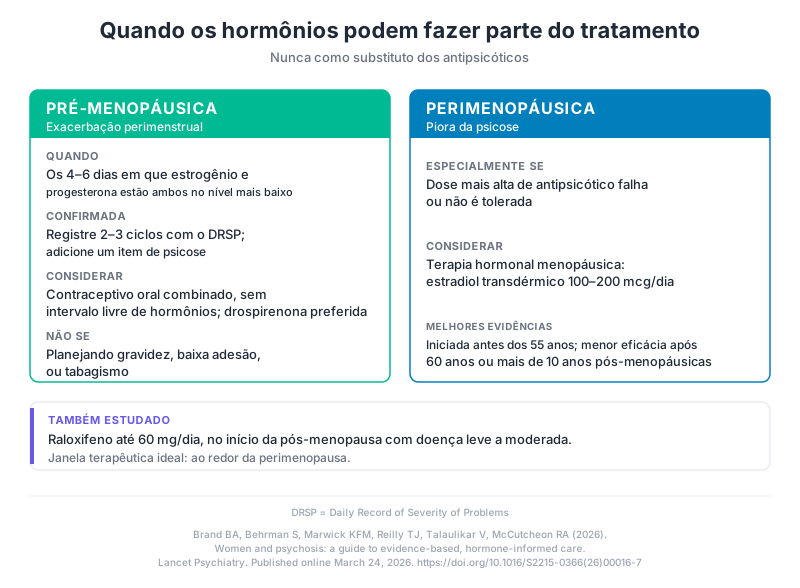
Embora todos esses pontos abordem como os hormônios podem interagir com o tratamento, uma pergunta frequente é quando — ou se — os hormônios deveriam ser o tratamento em si. Os autores destacam que os tratamentos à base de estrogênio não são um componente padrão do cuidado de mulheres com psicose. Certamente, esses tratamentos não devem substituir o papel dos antipsicóticos, mas há alguns cenários clínicos em que a incorporação do tratamento hormonal ao plano poderia ser considerada.
Baixe o PDF e outros arquivos
Contraceptivos orais combinados para mulheres pré-menopáusicas
Para mulheres pré-menopáusicas que apresentam exacerbações perimenstrual dos sintomas, um contraceptivo oral combinado utilizado sem intervalo livre de hormônios pode ser útil naquelas sensíveis às flutuações hormonais. Nesses casos, costumo recomendar preparações contendo drospirenona.
Nem todas as pacientes serão candidatas adequadas a essa abordagem. Dois exemplos são: quando a paciente deseja engravidar em breve, ou, alternativamente, quando quer evitar a gravidez, mas tem dificuldade em aderir a medicações de uso diário. A maioria dos DIUs e outras opções contraceptivas de longa duração é à base de progesterona e não seria esperada para conferir um potencial benefício da mesma forma.
Se os objetivos contraceptivos da paciente não forem compatíveis com o uso de contraceptivo oral combinado, priorizo a contracepção. Outra contraindicação frequentemente encontrada que deve estar no seu radar é o tabagismo, que aumenta os riscos cardiovasculares dos contraceptivos orais.
Terapia hormonal da menopausa na perimenopausa
Para mulheres perimenopaúsicas que apresentam piora dos sintomas psicóticos, a terapia hormonal da menopausa pode ser considerada. Isso é especialmente válido quando o aumento da dose do antipsicótico não é tolerado ou não é eficaz, ou quando a paciente apresenta outros sintomas que possam se beneficiar da terapia hormonal da menopausa, como ondas de calor.
A revisão enfatiza que as evidências mais consistentes de benefício na psicose provêm de ensaios que iniciaram o uso antes dos 55 anos e que utilizaram adesivos de estradiol transdérmico de 100 a 200 mcg por dia. As evidências são menos convincentes em mulheres com mais de 60 anos ou mais de 10 anos após o último período menstrual.
O raloxifeno, um agonista estrogênico no cérebro e nos ossos originalmente aprovado para o tratamento da osteoporose, também conta com alguns dados sugerindo que doses de até 60 mg por dia podem ser úteis em casos de mulheres na pós-menopausa inicial com doença leve a moderada. Em conjunto, esses achados indicam uma janela terapêutica ideal em torno da perimenopausa, o que se alinha a outros benefícios observados com a terapia hormonal da menopausa.
Baixe o PDF e outros arquivos
Ser informado pelos hormônios sem prescrever hormônios
Gostaria de concluir ressaltando que não é necessário começar a prescrever tratamentos hormonais por conta própria para incorporar uma perspectiva informada pelos hormônios à sua conceituação dos casos e ao seu planejamento terapêutico. Quando você e a paciente identificam que ela pode se beneficiar de um tratamento à base de estrogênio, colaborar com o obstetra ou o médico de atenção primária dela é um excelente ponto de partida.
Abstract
Resumo do artigo original, reproduzido em inglês.
Women and psychosis: a guide to evidence-based, hormone-informed care
Bodyl A Brand, PhD, Sophie Behrman, MRCPsych, Katie F M Marwick, MRCPsych PhDc ∙ Thomas J Reilly, MRCPsych, Prof Iris E C Sommer, MD PhD, Vikram Talaulikar, MD PhDd, et al.
Psychosis is associated with sex differences that are rarely considered in routine care. Oestrogen exerts protective effects, with symptom exacerbation and increased relapse risk occurring during low-oestrogen states, such as perimenstruation, postpartum, and menopause transition. Antipsychotic pharmacokinetics and response vary by sex and hormonal status, with premenopausal women requiring lower doses, and postmenopausal women showing reduced treatment efficacy. Antipsychotic-induced hyperprolactinaemia can suppress endogenous oestrogen, compounding both mental and physical health risks. Despite this, treatment guidelines remain largely sex neutral. This Review outlines the role of ovarian hormones in psychosis and offers practical considerations to support the first steps towards implementing hormone-informed care, providing a conceptual framework to guide clinical decision making with the aim of improving outcomes for women with psychosis across the lifespan. Key recommendations include thorough assessment of hormonal status, sex-specific prescribing, and the judicious use of oestrogen-based interventions such as hormonal contraception, hormone therapy, and oestrogen receptor modulators.
Baixe o PDF e outros arquivos
Referência
Brand, B.; Behrman, S.; Marwick, K.; Reilly, T.; Sommer, I.; Talaulikar, V. et al. (2026). Women and psychosis: a guide to evidence-based, hormone-informed care. The Lancet Psychiatry; 13(6):508-521.